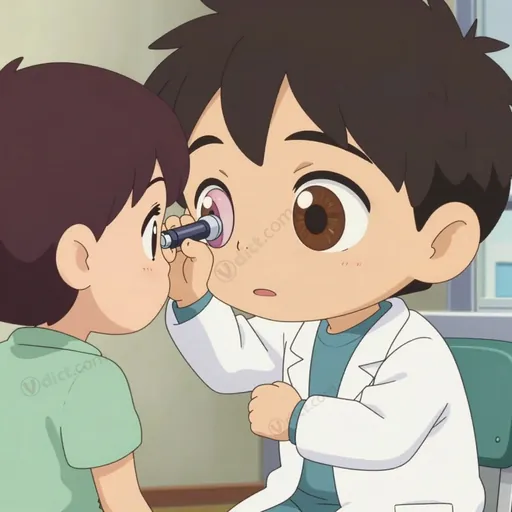
light reflex
Noun: - A physiological reflex where the pupil of the eye contracts in response to an increase in light intensity. This is an automatic, involuntary response controlled by the autonomic nervous system to regulate the amount of light entering the eye and protect the retina.
The term "light reflex" is used primarily in medical, biological, and physiological contexts to describe this specific automatic bodily response. - The doctor checked the patient's light reflex by shining a penlight into each eye. - A sluggish or absent light reflex can indicate neurological problems.
- Consensual Light Reflex: Refers to the constriction of the pupil in one eye when a bright light is shone into the eye. This occurs due to the partial decussation (crossing) of nerve fibers in the brainstem.
- Testing for the consensual light reflex is a standard part of a cranial nerve examination.
- Afferent and Efferent Pathways: In detailed medical discussion, the light reflex is analyzed in terms of its afferent (sensory, via the optic nerve) and efferent (motor, via the oculomotor nerve) neural pathways.
- An abnormal light reflex helps localize whether a lesion is in the afferent or efferent pathway.
- Pupillary Light Reflex (PLR): This is the full and more precise term for "light reflex."
- Photopupillary Reflex: A less common synonym.
- Reflex: A broader term for an involuntary and nearly instantaneous movement in response to a stimulus.
- Pupillary reflex
- Pupillary light response
- "Test the light reflex": The standard phrase for the clinical action of checking this reflex.
- The neurologist will test the light reflex to assess brainstem function.
- "Light reflex is intact": A common clinical note indicating the reflex is functioning normally.
- The examination showed that the light reflex was intact bilaterally.
The "light reflex" is a key component of a standard neurological exam. It is distinct from the accommodation reflex, which is the constriction of the pupil when focusing on a near object, although both are often tested together (this combined test is sometimes referred to as the "Pupillary Light and Accommodation" or "PLR and accommodation" test).
-
reflex contraction of the sphincter muscle of the iris in response to a bright light (or certain drugs) causing the pupil to become smaller
Khám phá thêm
Các từ liên quan
Từ đồng nghĩa